Taylor Koch · 6 October 2026
Adapting Editorial Workflows to Seasonal Fluctuations in Hyperlocal Query Patterns for Solo Publishers
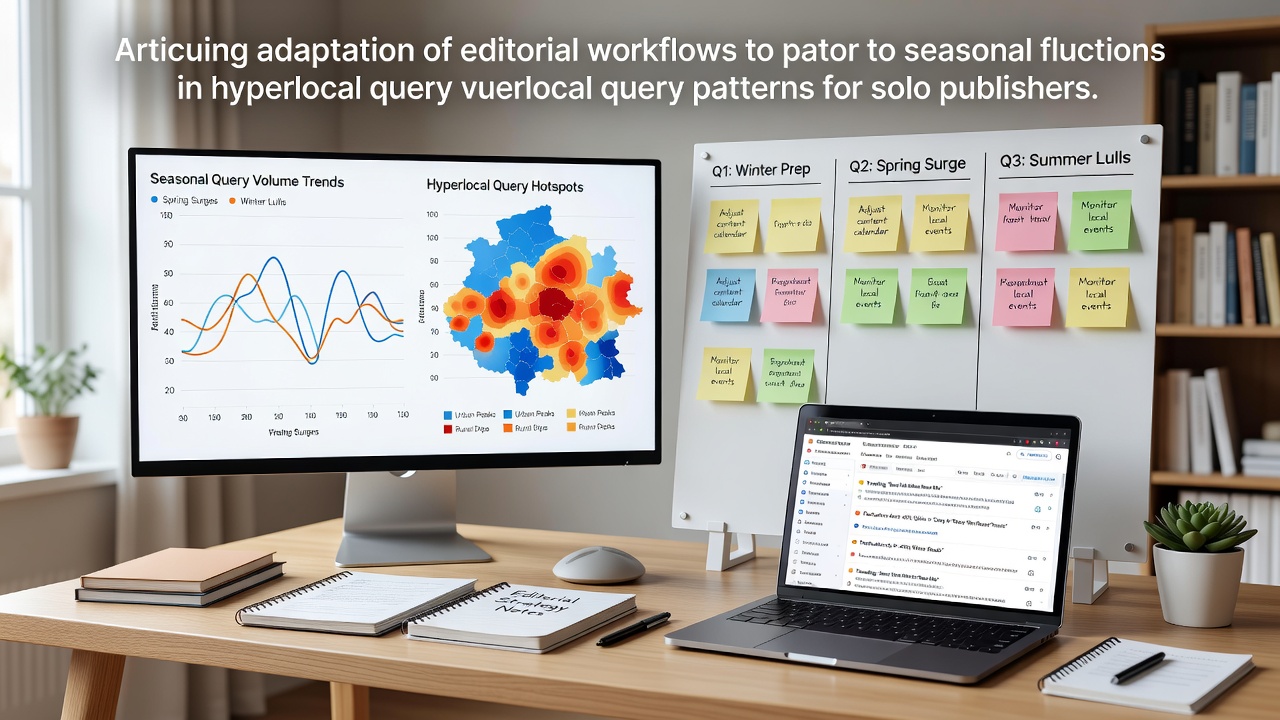
Hyperlocal query patterns shift throughout the year as user interests align with weather changes, community events, and regional calendars, and solo publishers track these movements through analytics platforms to adjust their content production schedules accordingly. Research from various digital marketing studies shows that searches for neighborhood-specific services often spike during particular months, such as increased queries for local hiking trails in spring or holiday market locations in December, while data from Statista reports indicate measurable volume differences across geographic zones.
Those who manage independent sites monitor tools like Google Trends and local keyword planners to identify these cycles early, allowing them to prepare topic clusters that match rising demand without overextending limited resources. Observers note that patterns in one city rarely match those in another, so publishers segment their data by zip code or suburb to avoid generic approaches that miss targeted opportunities.
Identifying Seasonal Shifts Through Data Sources
Solo publishers pull information from multiple analytics channels, including web server logs and third-party keyword tools, to map fluctuations that occur on a monthly or quarterly basis. Academic papers from institutions such as the University of Melbourne have examined how hyperlocal searches respond to temperature variations and public holidays, revealing consistent correlations between environmental factors and query intent across Australian regions. Figures from these studies demonstrate that queries for heating services rise sharply in cooler months, whereas summer months see elevated interest in outdoor equipment rentals and community festivals.
Because solo operators handle research, writing, and promotion alone, they establish recurring review periods where they export data sets and categorize terms by expected volume changes. This process helps prioritize evergreen pieces during low-fluctuation windows and time-sensitive local guides when patterns indicate upcoming demand surges.
Adjusting Content Calendars and Production Cycles
Workflow modifications begin with the creation of flexible calendars that allocate blocks for rapid content updates when seasonal signals appear in analytics dashboards. Publishers divide tasks into research phases, drafting stages, and optimization rounds, inserting buffer periods that accommodate sudden spikes without disrupting ongoing projects. Data indicates that those who batch similar topics together, such as preparing several neighborhood event roundups in advance, reduce context-switching time and maintain output consistency.
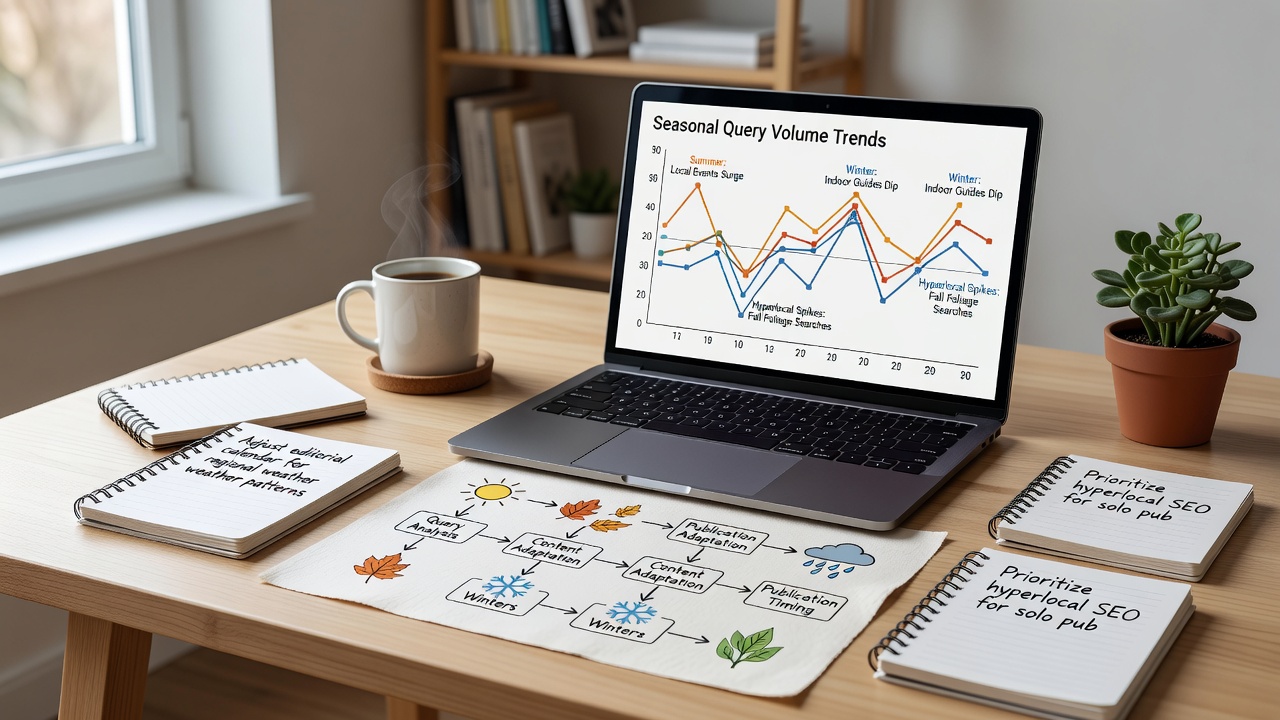
During transitional periods like early fall, operators review historical performance from prior years to forecast needs for October 2026, when local harvest events and school-related searches typically increase in many North American and European communities. They cross-reference these forecasts with real-time alerts from search console data to confirm whether patterns are repeating or shifting due to external influences such as weather anomalies or new local regulations.
Tools and Automation for Solo Operations
Independent creators integrate lightweight automation scripts that flag emerging query clusters, sending notifications when certain keyword thresholds are crossed in their target areas. European Union digital economy reports highlight how small publishers benefit from open-source analytics integrations that aggregate data from multiple local sources without requiring large team oversight. These systems allow one person to maintain visibility across several content verticals while responding to pattern changes in near real time.
Publishers also establish relationships with freelance contributors who can be activated during peak windows, though the core editorial decisions remain centralized to preserve site voice and local accuracy. This hybrid model keeps operational costs predictable while scaling output when hyperlocal interest intensifies.
Measuring Outcomes and Refining Approaches
Performance tracking extends beyond raw traffic numbers to include engagement metrics such as time on page for location-specific articles and conversion rates for community service listings. Research compiled by Canadian statistics agencies shows that sites adapting their workflows to seasonal signals record steadier audience retention compared with those maintaining static calendars year-round. Solo publishers therefore set quarterly evaluation checkpoints where they compare projected versus actual query alignment and adjust future planning templates accordingly.
Continuous refinement incorporates feedback loops from search performance data, enabling incremental improvements without large-scale overhauls that exceed individual capacity.
Conclusion
Effective adaptation requires ongoing observation of hyperlocal search behavior combined with structured yet flexible production systems that solo publishers can sustain independently. By aligning editorial timelines with documented seasonal patterns and leveraging accessible data tools, independent operators maintain relevance across fluctuating demand periods while managing resource constraints. The approach yields consistent content delivery that matches user needs as they evolve throughout the calendar year.