Greta Beck · 8 September 2026
The Subtle Mechanics of Reestablishing Online Visibility After Major Site Relocations
Site relocations involve moving content from one domain or server infrastructure to another, and these shifts trigger changes in how search engines crawl and rank pages, according to data from multiple industry reports. Experts have observed that the process requires careful handling of redirects, sitemap updates, and backlink preservation to maintain visibility levels. Research indicates that incomplete migrations often lead to temporary drops in organic traffic, while properly executed ones allow recovery within weeks or months depending on the scale of the change.
Core Technical Adjustments During Relocations
Search engines rely on signals such as canonical tags, hreflang attributes, and structured data to understand relocated content, and those who manage migrations note that updating these elements prevents duplicate content issues. Data shows that implementing 301 redirects from old URLs to new ones transfers authority effectively, yet monitoring tools reveal that some engines process these signals at different speeds. Observers note that submitting updated sitemaps through webmaster consoles accelerates reindexing, and figures from recent analyses confirm that sites using this approach see faster restoration of indexed pages.
Server configuration plays a role as well, since DNS propagation times vary by region and affect crawl frequency, while experts recommend setting up temporary holding pages during transition periods to avoid error codes that could signal instability. Studies from academic sources highlight how mobile-first indexing priorities remain consistent across relocations when responsive design elements stay intact, and this consistency helps preserve rankings for location-based queries.
Monitoring and Recovery Patterns
Analytics platforms track referral patterns before and after moves, revealing that backlink profiles require verification through outreach to referring domains for updated links. Research indicates that in September 2026, several documented cases demonstrated quicker recoveries when teams combined redirect audits with content audits to eliminate broken internal links. People who've handled these projects often discover that third-party tools provide alerts on crawl errors, allowing adjustments that align with engine guidelines from sources like the Australian Communications and Media Authority.
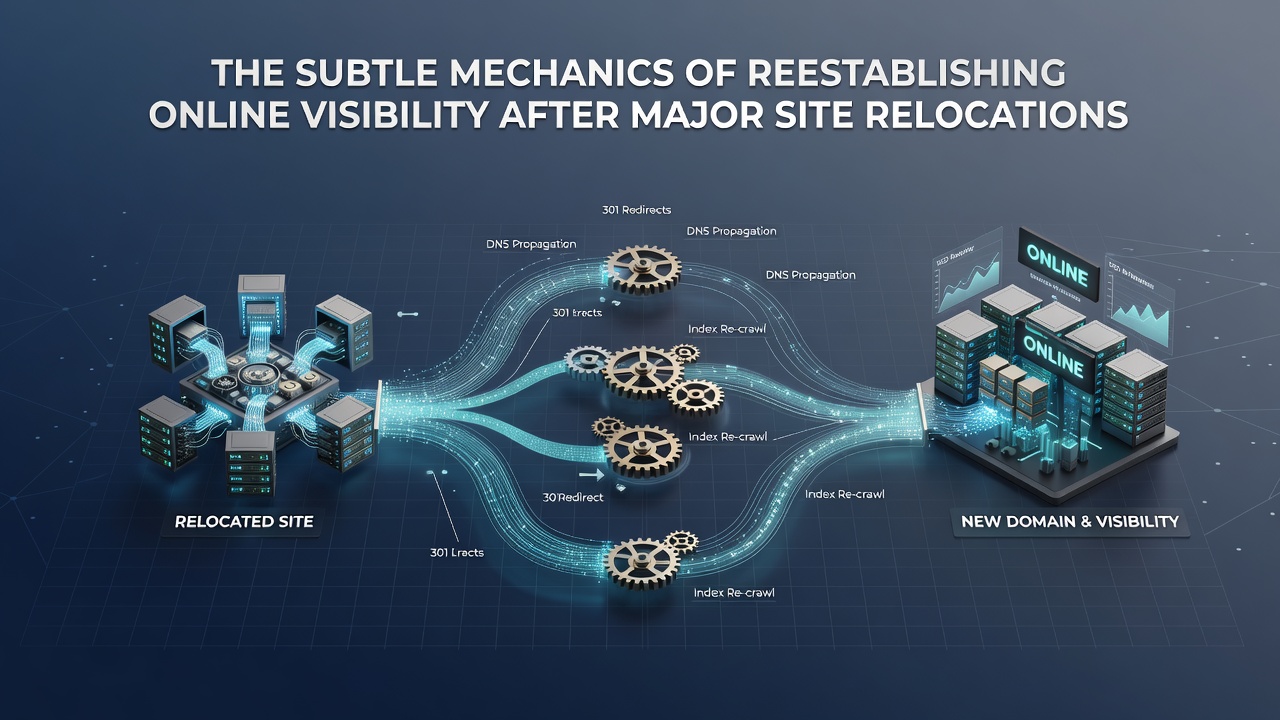
Backlink analysis becomes essential because engines evaluate link equity transfer through these redirects, and data from industry organizations shows variations based on the age and quality of the original domain. Those who've studied migration logs report that geographic targeting settings in search consoles need manual confirmation to avoid shifts in regional visibility, particularly for sites serving multiple languages or countries.
Content and User Experience Considerations
Content audits identify pages that may need adjustments for new URL structures, while maintaining keyword mappings ensures continuity in search intent matching. Evidence suggests that user behavior metrics such as bounce rates and dwell times influence post-migration rankings, and maintaining consistent page load speeds through optimized hosting prevents negative signals. Researchers discovered that integrating schema markup updates during the relocation supports rich snippet retention across engines.
Communication with users through email notifications or on-site banners helps manage expectations during any downtime, and this approach reduces direct traffic loss that could compound visibility challenges. Figures reveal that sites incorporating these steps alongside technical fixes achieve more stable recovery trajectories compared to those focusing solely on redirects.
Long-Term Maintenance Strategies
Regular audits after the initial transition catch lingering issues such as outdated references in external directories or social profiles. Academic papers on digital infrastructure emphasize the value of logging all changes for future reference, allowing teams to replicate successful elements in subsequent projects. Observers note that ongoing collaboration with hosting providers ensures server-level settings support sustained crawl access without interruptions.
Link building efforts may need refreshment to compensate for any equity fluctuations, yet data shows that preserving existing relationships yields better results than new campaigns alone. Those managing enterprise-level sites often find that phased migrations, rather than full simultaneous switches, provide controlled testing environments for visibility metrics.
Conclusion
Reestablishing visibility after site relocations depends on coordinated technical, analytical, and communicative actions that align with engine processing patterns. Evidence from diverse regulatory and research bodies confirms that systematic approaches lead to measurable recovery, and ongoing monitoring supports adaptation to evolving standards. The process remains grounded in verifiable steps that preserve established online presence when executed with precision.